
English| EUR
Suggested for you
More currencies
Choose a language
Cala Luna sits on the Golfo di Orosei, reachable on foot along a limestone coast path or by boat from Cala Gonone. This page sets out what the walk involves, when the cove is quietest, and how the free-access beach fits into a wider day plan. Every figure here comes from verified visitor information rather than estimate.
Quick answer
Reaching Cala Luna on foot involves roughly 200 steps of descent to the shore, and the beach itself is free — entry costs 0 EUR, with no gate or admission booth. The cove is open around the clock, 00:00–23:59 every day. The one caveat: arrive between 06:00 and 09:00, before midday heat and the boat crowds that begin near 10:00.
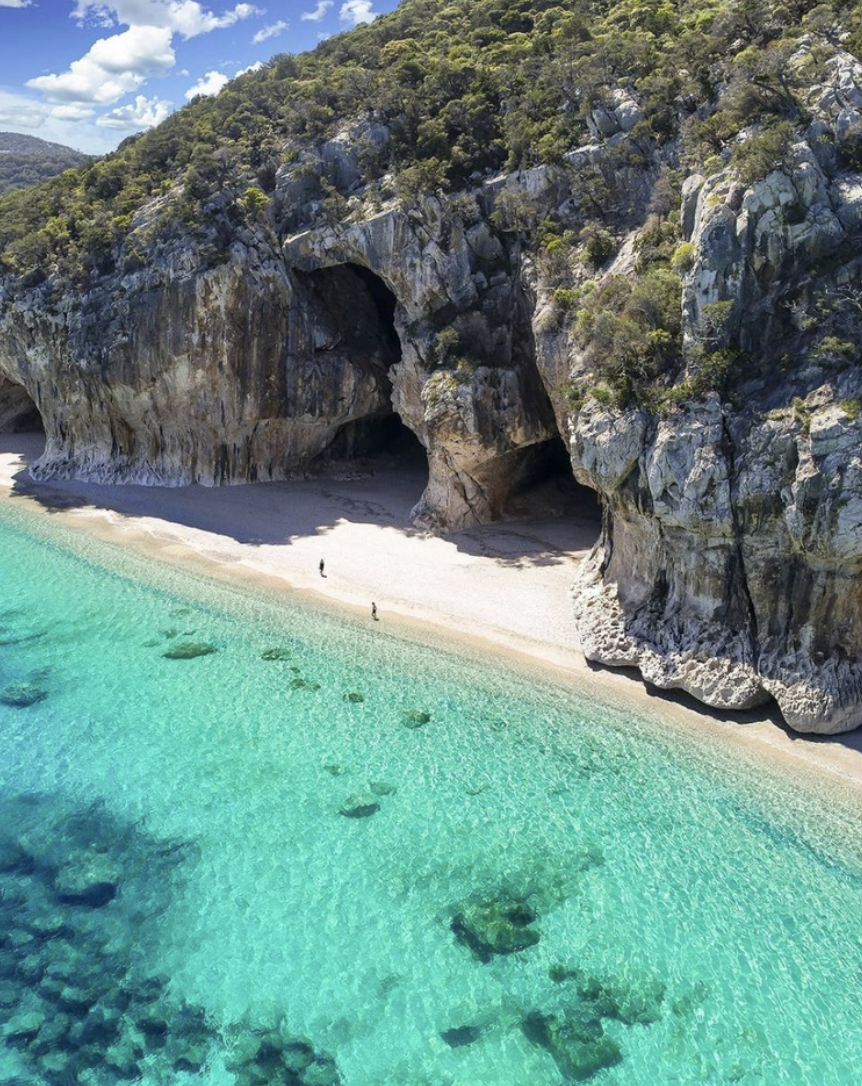
The cove has no road. Cala Luna, at 08022 Dorgali NU on Sardinia's eastern coast, cannot be reached by car at all: the only ways in are the water and a footpath cut into limestone. That single geographic fact shapes everything about a visit, from when the beach fills to how quickly it empties again in the late afternoon. Anyone considering the cala luna hike is dealing with a coastal traverse through the Supramonte's seaward edge, part of the protected Gulf of Orosei shoreline. The path leaves from Cala Fuili, south of Cala Gonone, and threads through juniper scrub, Mediterranean maquis and exposed karst before dropping toward the beach. There is little shade on the open stretches. The terrain is dry, pale and reflective, and the descent to sea level accounts for the roughly 200 steps that most walkers remember afterwards. At the bottom, the reward is a crescent of coarse sand backed by a row of sea caves — the grotte that give the cove its silhouette in every photograph — and the mouth of the Codula di Luna, the dry riverbed that drains inland through the mountains toward Urzulei. Swimmers, kayakers and climbers all converge on the same strip of shore. The context that makes the timing advice sensible is the boat schedule. Cala Gonone's excursion fleet begins arriving mid-morning, and by late morning the cove holds several hundred people who did not walk in. Anyone planning a trekking a Cala Luna outing therefore competes with a crowd that arrives faster and rests fresher. Walkers who start early have the shoreline nearly to themselves, then either return on foot or step onto a return boat. Summer heat compounds the problem: from June through September, the exposed Sardinian trail is genuinely punishing after mid-morning. What to do with all this is a matter of sequencing. Treat the walk as the morning's main activity rather than an addition to a full beach day, and decide in advance whether the return leg will be on foot or on water — the two choices imply very different afternoons. Fitness, footwear and water supply matter more here than on most Sardinian coastal walks, because there is no shop, no shade structure and no easy exit halfway along. Read this cala luna hike guide alongside the dedicated timing, access and preparation sections below, then match the plan to a departure that suits the day.
“The cove has no road: the only ways in are the water and a footpath cut into limestone.”
This plan suits reasonably fit walkers hiking the coastal trail from Cala Fuili to Cala Luna and back, budgeting roughly seven to eight hours door to door with generous rest stops. The route runs about 3.5 km each way over rocky, exposed limestone terrain.
Descend the stepped path to the Cala Fuili inlet and pick up the marked coastal trail south. Allow 15 minutes for the descent before the climbing begins.
The trail rises steeply through juniper and mastic scrub onto the headland above the Gulf of Orosei. Expect 40 minutes of steady ascent with loose stone underfoot.
Stop 10 minutes where the path levels above the sea for water and to check the cairns marking the route ahead.
The final stretch drops through the dry riverbed valley toward the shore, about 45 minutes of uneven ground. Arriving inside the 06:00–09:00 window means the beach is still quiet.
Walk the beach to the row of caves at its northern end, then swim or rest. Two to three hours here is realistic before the return.
Eat what you carried in beneath the cliff overhang or under the oleanders in the codula. Budget 45 minutes and refill on fluids before moving.
Retrace the same trail, allowing 2 to 2.5 hours; the reclimb out of the valley is the hardest part in afternoon sun.
Reach the car park with daylight to spare. A short swim at Cala Fuili is an easy way to end the day.
The hiking trail to Cala Luna begins at Cala Fuili, located south of Cala Gonone. Access to the trailhead is primarily achieved by driving along the coastal road.
SS125 to Dorgali, then follow signs to Cala Gonone and continue to the end of Viale Bue Marino
From the end of Viale Bue Marino, follow the coastal path signage
Parking at the Cala Fuili trailhead is limited along the roadside; arriving early ensures you secure a spot near the path entrance.
This walk-through covers the coastal trail from the Cala Fuili trailhead south to Cala Luna, ending with the 200-step descent to the sand. Most walkers spend roughly two to two and a half hours each way over uneven limestone terrain.
Drop down the concrete ramp and stone steps at the back of Cala Fuili to the pebble cove, then pick up the marked path climbing the far side. Walkers often mistake the low scramble along the shoreline for the route; the trail begins with a climb inland, not at water level.
Track the red-and-white paint splashes on rocks and juniper trunks through the maquis scrub. The path forks in several places toward viewpoints and goat tracks, so stop and confirm the next marker before committing to a branch rather than following the most worn-looking ground.
Several stretches run over bare, polished rock with a slope toward the sea, where grip matters more than fitness. Place feet flat rather than on edges, and slow down on descents; smooth soles slide on this stone even when it is completely dry.
The route gains and loses height twice as it rounds the headlands, with short steep pushes between shaded gullies. Underestimating the cumulative ascent is the usual error here, so treat the return leg as equally demanding rather than downhill.
The final approach drops through a rock-cut staircase of 200 steps toward the beach and its caves. The steps are irregular in height and narrow in places, so descend one at a time and step aside for groups coming up rather than passing on the outer edge.
At the bottom the path opens onto the sand between the sea caves. Check your remaining water and energy before settling in, since the same terrain has to be recrossed on foot unless you have arranged a boat departure.
Access to the Cala Luna trail and the beach itself is entirely free of charge. There are no formal gates, admission fees, or required tickets for hikers or beach visitors.
Verdict: The total entrance cost for an adult is 0 EUR, as the site remains accessible to the public without fees.
The Cala Luna hiking trail is accessible to hikers at all hours throughout the week.
Cala Luna sits at the end of an exposed coastal trail with no shops or shade at the beach, so what you carry determines how comfortable and safe the trek is.
Everything you need to know about cala luna hike
The trek to Cala Luna is considered moderately challenging due to the terrain and summer heat. Hikers should be prepared for rocky paths that wind through the limestone cliffs of the Gulf of Orosei.
To avoid peak midday heat and large boat crowds, visitors should aim for an arrival window between 06:00 and 09:00. Starting early also ensures a quieter experience on the coastal trail.
There is no formal admission fee for the cala luna hike, as entry to the beach is free. Travelers should be aware that costs only apply if they choose to use private transport or boat services for the return journey.
Many visitors opt to complete the cala luna trek one way and return by boat to see the limestone caves from the water. This combination allows for a full experience of the Gulf of Orosei shoreline without the need to backtrack on foot.
The final descent toward the beach involves 200 steps that lead directly onto the sand. These steps are a well-known feature of the path, providing a clear marker that you have reached the destination.
Essential gear for this Mediterranean excursion includes sturdy hiking shoes, sufficient water, and sun protection. Since there is limited shade along the limestone coastal route, hydration remains critical for all trekkers.
While the trail can be navigated by active families, it is not recommended for small children or those without previous trekking experience. The terrain requires steady footing and endurance, especially during the warmer summer months.